

Like many working parents, summer presents a challenge that starts the moment the school year ends: if both parents work full-time, where are the kids going to go all day?
For years, our answer was summer camp.
And honestly? Summer camp was a mixed bag.
The lower-cost camps often looked great on the surface, but they had huge groups of kids, inconsistent structure, and frequent supervision concerns. It seemed like every week there was something that left me uneasy.
The specialty camps were much better experiences. Our local zoo camp was fantastic. Art camps were wonderful. But they came with their own challenges. Most only ran from 9:00 AM to 3:00 PM, many started at age six, and the costs added up quickly.
Last summer we spent nearly $700 per week on camps for two children.
On top of that, my husband had to use leave time every single day to cover late drop-offs and early pick-ups. The kids were constantly transitioning between different camps, different counselors, different groups of children, and different schedules.
By the time school started again, it felt like we had spent the entire summer managing logistics.
I knew there had to be a better way.
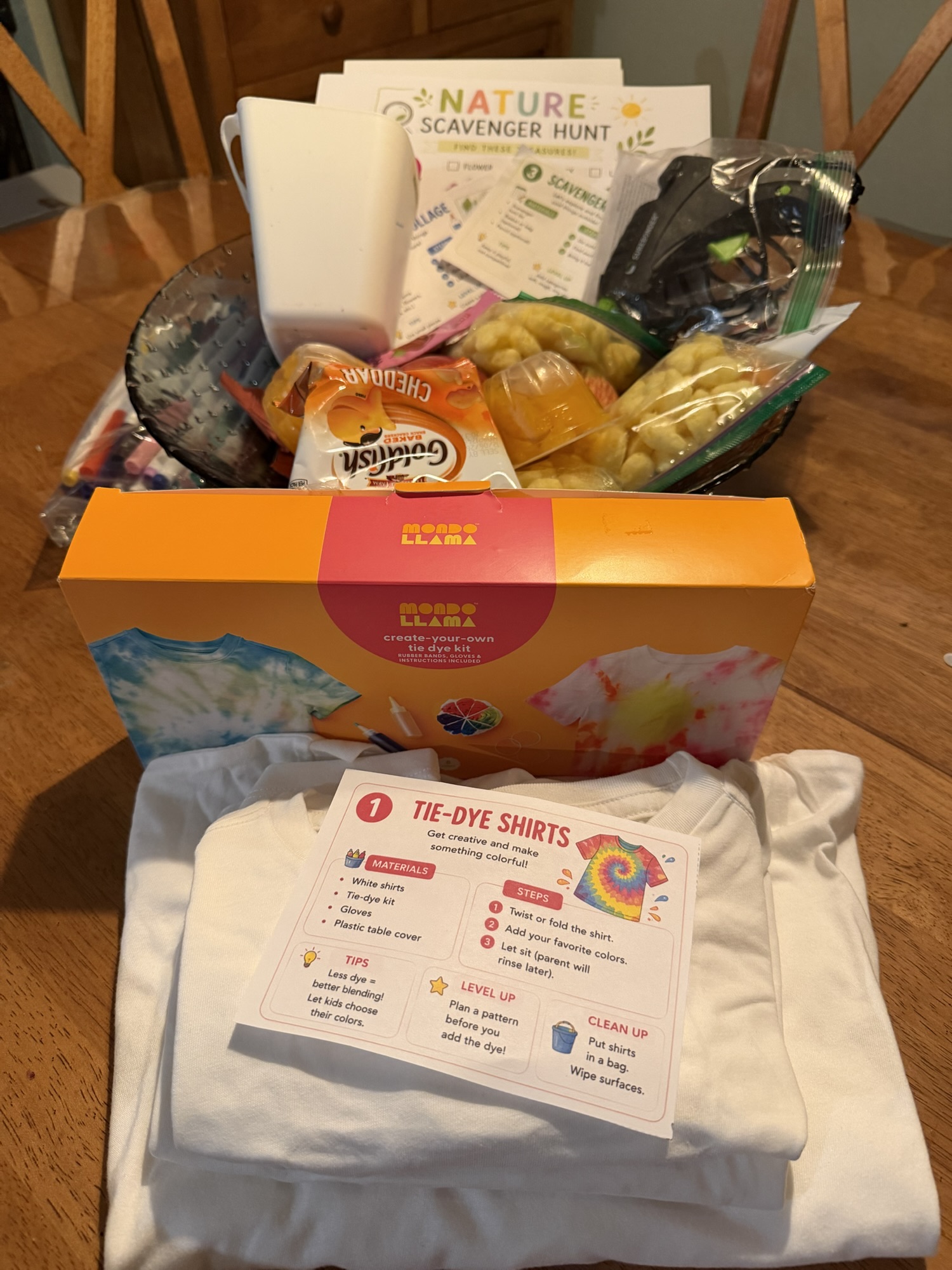
The Idea: Bring Summer Camp Home
Immediately after last summer ended, I started planning for the next one.
I researched every camp option I could find. I looked at schedules, costs, locations, age requirements, and transportation needs.
Eventually, I landed on an idea that seemed a little crazy at first:
What if we created our own summer camp at home?
Instead of sending the kids somewhere every day, what if I hired a responsible high school student to be our in-home summer camp counselor?
I started asking around, explaining the vision to potential candidates. I wasn’t looking for someone to sit on the couch and supervise.
I wanted someone who could help create an actual camp experience.
We eventually found an amazing high school student who committed to the summer.
Before making it official, we had her come over for several hours to babysit. She made lunch with the kids, watched movies, played games, did crafts, and spent time getting to know them.
It was an interview for all of us.
We wanted to make sure she was comfortable with our family, and more importantly, that the kids connected with her.
Thankfully, they did.
Building the System
Once we had our counselor, my job shifted from finding help to setting everyone up for success.
I created:
- A daily camp schedule
- Weekly camp themes
- Activity ideas
- Behavior guidance notes
- Pool and outdoor play expectations
- Easy craft instructions
- Supply lists
I wanted the experience to feel like a real summer camp, so each week had its own theme—creative crafts, outdoor adventures, summer fun, and more.
Most activities used supplies we already had around the house.
Cardboard boxes became building projects.
Pool noodles became relay race equipment.
Simple art supplies became entire afternoons of creativity.
Everything was organized in Google Drive and shared with our counselor before summer started.
I used ChatGPT to brainstorm activities, Canva to create supporting materials, Google Drive to organize everything, and Google Calendar to manage scheduling.
One unexpected benefit was flexibility.
Since we weren’t tied to a camp’s calendar, we were able to schedule our family vacation around our counselor’s vacation dates. That meant we weren’t paying for camp during a week we wouldn’t even be using it.
This is one of my favorite examples of a family system. When responsibilities stop relying on memory and start relying on structure, everything gets easier.
The Results Have Been Better Than I Imagined
We’re only a short time into summer, but the results have already exceeded my expectations.
Our counselor arrives at 8:00 AM. Some mornings, one of the kids is still asleep. There’s no rushing out the door, no packing lunches. no remembering which day is water day, and no wondering what forms need to be signed.
The kids ease into their day.
Then they’re off. They’ve ridden bikes, used scooters and hoverboards, built cardboard creations, done sponge relay races, spent hours in the pool. played with neighborhood friends, and created art projects, games, goals, and inventions.
Most importantly, they’re active, engaged, and genuinely enjoying themselves.
My husband and I are able to work our normal schedules without daily drop-off and pick-up disruptions.
And when we finish work, we come home to tired kids—not overstimulated kids.
There’s a difference.
The Unexpected Benefit
One benefit I never anticipated was the amount of time my daughters would spend together.
During the school year they’re separated much of the day.
Even in traditional summer camps, they often end up in different groups, different activities, and different schedules.
This summer they’ve spent significantly more time together.
They’re building memories.
They’re solving problems together.
They’re learning how to navigate boredom, creativity, and play together.
That’s something I couldn’t have planned for, but it’s become one of my favorite parts of the entire experience.
Why This Worked
Looking back, I don’t think the biggest win was saving money.
It wasn’t even eliminating transportation.
The biggest win was reducing decisions.
We eliminated:
- Daily drop-offs
- Daily pick-ups
- Weekly camp changes
- Transportation logistics
- Constant schedule adjustments
- Last-minute packing
- Endless reminders
Instead of managing dozens of moving pieces, we built one system that supported the entire summer.
That’s really what good systems do.
They don’t just save time.
They reduce the amount of responsibility flowing through you.
And when that happens, everything feels a little lighter.
Want to Try It?
Because so many people have asked about our setup, I packaged the framework into an At-Home Summer Camp Starter Kit.
It includes the schedules, planning tools, themed weeks, activity ideas, and resources I used to build our family’s version of summer camp.
You can use the entire system or simply borrow pieces of it for a week at home, a grandparent visit, or a few weeks between camps.
Whether you create your own version or use mine as a starting point, I can honestly say this has been one of the best decisions we’ve made for our family.
And for the first time in years, summer feels less like something we’re surviving and more like something we’re enjoying.
Feeling like everything depends on you? Download my free Capacity Reset Starter Guide and start identifying the responsibilities that are creating hidden bottlenecks in your life.