


Balancing work and family under one roof can feel like walking a tightrope. But with the right boundaries, it’s possible to thrive.
Working from home was something I rarely did until March 13, 2020. That was the day we were all sent home “for two weeks,” which turned into 18 months of full-time remote work. Since then, I’ve transitioned into working from home two days a week.
On the ideal days, I’m in a nice, quiet environment—starting work on time, coffee in hand, and tasks organized. But let’s be real. I’m a mom and a manager. You get the picture! While I don’t have the commute or office distractions, my home comes with its own challenges: the never-ending task list staring me down and, on school-free days, my kids crashing my Teams calls like moths to a flame.
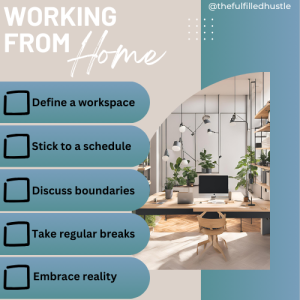
Through trial and error, I’ve discovered some lessons that have helped me stay productive, balanced, and (mostly) sane. Here’s what I’ve learned:
Tip 1: Define a Workspace
…And no, the dining room table doesn’t count.
While its proximity to the coffee maker might make it tempting, every time I’ve worked there, I’ve ended the day feeling less productive—and with more body aches.
A dedicated workspace, whether it’s a home office or a simple desk in a quiet corner, sends a signal to your body, mind, and family: This is work time.
Why it works:
- It helps you mentally separate work from home life.
- Your family knows when you’re “on the clock.”
Quick Tips:
- Add ergonomic essentials like a supportive chair and adjustable desk height.
- Personalize your space with things that motivate you—a plant, a photo, or even a fun mug for that coffee!
- If you’re a hybrid worker, try to replicate your office setup as much as possible. I spent almost two years working off my laptop before finally investing in a second monitor and a docking station. It was life-changing!
- Budget-conscious? Look for used PC monitors on Facebook Marketplace or shared-use docking stations.
Tip 2: Stick to a Schedule
Define your start and end times—and stick to them.
One of the benefits of working from home is flexibility, but it can be a slippery slope to inconsistency. For me, sticking to my 8–4 schedule is critical. My in-office days involve a two-hour commute, so it’s easy to be tempted to sleep in or take extra time with the kids when I’m home.
When I stick to my regular work hours, I reclaim that quiet time parents crave, and I start the day feeling productive.
Why it works:
- Establishes a routine that helps balance work and family time.
- Prevents work from creeping into personal life.
Quick Tips:
- Share your schedule with your family and set reminders to stay on track.
- Start your day as if you were commuting: get dressed, prep your coffee, and be at your desk on time.
Tip 3: Discuss Boundaries
Boundaries are one of those things we don’t often take the time to communicate – when we’re multitasking all the time, it’s hard to figure out where they even start and end!
When working from home, clear communication is key—not just for your family but for your work team too. If your kids are home and you have an important meeting, let them know ahead of time. It’s a great opportunity to model how to handle serious situations.
Why it works:
- Sets expectations for everyone involved.
- Helps avoid misunderstandings or interruptions.
Quick Tips:
- Balance flexibility with professionalism. While my workplace is family-friendly and my team loves seeing my kids, I make it clear when that’s appropriate and when it’s not.
- Remember, many issues arise not from bad intentions but from unclear expectations—so always communicate!
Tip 4: Schedule Regular Breaks
Don’t just work—rest intentionally.
I can get so focused on work that hours will pass before I realize I haven’t moved. Enter the Pomodoro Technique. It’s a game-changer. At its simplest, you work for 25 minutes, take a 5-minute break, and repeat. After three cycles, take a longer break. Those 5-minute breaks are best spent doing something mindful—like a quick walk or meditation—not tackling laundry or chores.
Why it works:
- Prevents burnout and improves focus.
- Helps reset your mind and body.
Quick Tips:
- Use a timer app to keep you on track.
- Make breaks about recharging: step away from the screen, hydrate, or spend a moment with family.
Tip 5: Embrace Reality and Be Flexible
Some days won’t go as planned—and that’s okay.
As a leader who spends in-office days collaborating with my team, I use my work-from-home days for focus work. This balance allows me to prioritize deep work while staying connected to my teammates. Flexibility means knowing the strengths and limits of both environments and adapting to make the most of them.
Why it works:
- Allows you to balance focus work and collaboration effectively.
- Reduces stress when unexpected situations arise.
Quick Tips:
- Plan your work strategically: save administrative tasks or focused projects for home days.
- Stay adaptable – life happens, and you can adjust your schedule to make it work.
Conclusion
Working from home can feel like a juggling act, but with the right boundaries, you can create a routine that works for you, your family, and your career.
What boundary-setting tip will you try first? Share your thoughts in the comments—I’d love to hear your experiences!